It is the transportation of a patient receiving ECMO support from one medical facility to another while maintaining appropriate critical-care and ECMO support.
ECMO Transfer Services
When a critically ill patient requires extracorporeal membrane oxygenation (ECMO) support and needs to be moved to another hospital or specialist medical centre, transportation requires careful medical and logistical planning.
Human Care Worldwide coordinates global ECMO patient transfers by ground ambulance or air ambulance, working with referring hospitals, receiving medical centres, critical-care teams and transport partners.

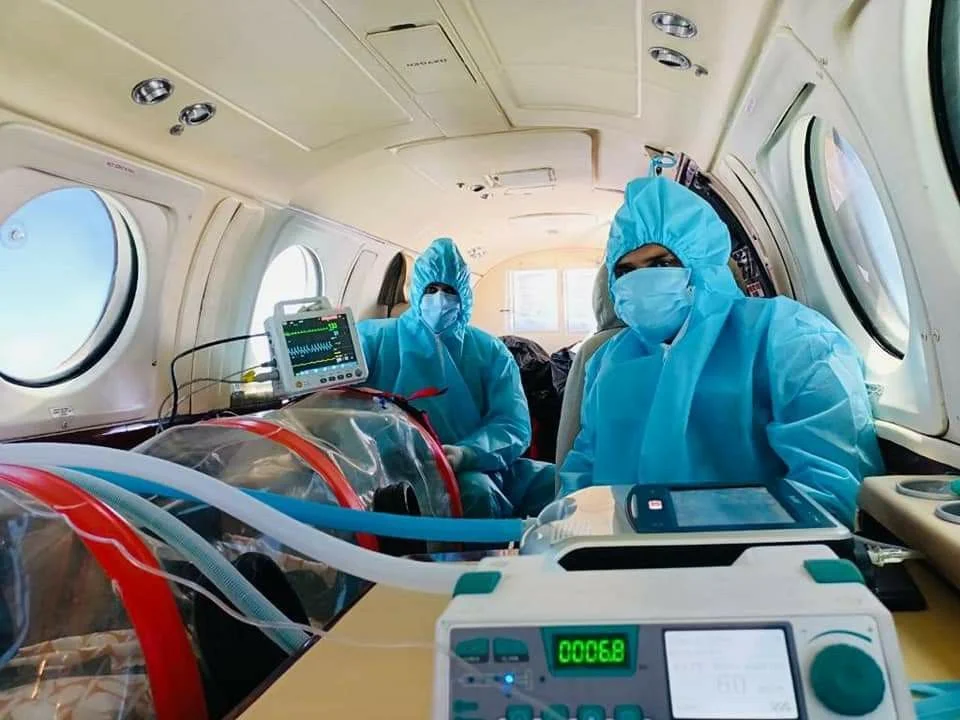
Global ECMO Transfer Services
ECMO, or Extracorporeal Membrane Oxygenation, is an advanced form of life support used for selected patients with severe cardiac or respiratory failure. Since patients receiving ECMO may depend on continuous support, transfers between medical facilities require specialist planning and experienced personnel.
We assist with hospital-to-hospital transportation, international medical repatriation, air ambulance transfers and specialized ground transportation. Every case is assessed individually according to the patient’s condition, ECMO requirements, distance, destination and operational circumstances.
Important: Transport suitability and the clinical plan must be determined by the treating medical team and qualified ECMO specialists.
What Is ECMO Patient Transfer?
Understanding ECMO
Extracorporeal Membrane Oxygenation temporarily supports the function of the heart and/or lungs. Blood circulates through an external circuit where oxygen can be added and carbon dioxide removed before the blood returns to the patient.
Because ECMO patients may be clinically unstable, any transfer requires detailed preparation, continuous monitoring and specialist clinical supervision.
Why Do ECMO Patients Need Transfer?
A patient may need transfer when the current hospital does not have the ECMO expertise, specialist facilities, surgical services, transplant programme or critical-care resources required for continued treatment.
Patients may also be moved to a specialist ECMO centre or repatriated closer to home when medically and operationally appropriate.
Our ECMO Patient Transfer Services
Coordinated medical transportation for complex and time-sensitive patient journeys.
Hospital-to-Hospital
Coordination between the referring ICU, receiving ICU, transport team and ambulance partners.
ECMO Air Ambulance
Long-distance and international fixed-wing transport planned around the patient’s equipment and clinical needs.
Ground ECMO Transport
Specialized short- and medium-distance ambulance transportation with appropriate equipment and personnel.
International Repatriation
Bed-to-bed coordination including hospital communication, aviation, airport logistics and receiving-facility support.
Why Choose Human Care Worldwide?
- Specialized medical coordination: We connect hospitals, critical-care teams, transport providers and receiving facilities.
- Global support: Our network helps coordinate complex patient movement across borders, subject to feasibility.
- Bed-to-bed transfers: We can coordinate the full journey from the referring ICU through to the destination facility.
- Multimodal options: Ground ambulance, helicopter or fixed-wing aircraft may be considered according to the case.
- 24/7 assistance: Support is available for hospitals, healthcare professionals, families, insurers and authorized representatives.
- Individual assessment: Each plan reflects the patient’s age, condition, ECMO configuration, route and receiving facility.
How ECMO Transfer Is Coordinated
1
Initial medical information
Collecting the diagnosis, current condition, ECMO configuration, monitoring requirements and destination.
2
Medical and transport assessment
Reviewing clinical needs, distance, route, equipment, oxygen and power requirements.
3
Receiving hospital coordination
Confirming acceptance and the required level of critical care with the receiving team.
4
Transport team coordination
Arranging appropriately trained medical personnel and the required transport equipment.
5
Ground and air planning
Coordinating hospital transfers, airport connections, aircraft selection and operational logistics.
6
Continuous monitoring and handover
Maintaining critical-care supervision in transit and completing a structured handover at arrival.
Equipment and Patient-Specific Planning
Depending on the patient’s needs, the transport configuration may include ECMO equipment, monitoring systems, ventilatory support, oxygen supplies, emergency equipment, infusion systems and backup resources.
Transport vehicles and aircraft must have suitable electrical and oxygen capacity. Adult, pediatric and neonatal ECMO transfers can require different considerations related to size, vascular access, monitoring, equipment and specialist care.
Conditions Supported
VV-ECMO may provide respiratory support for selected patients with severe respiratory failure.
VA-ECMO may provide cardiac and respiratory support in selected cases of severe cardiac or combined cardiopulmonary failure.
Frequently Asked Questions
-
What is an ECMO transfer?
-
Can ECMO patients travel by air ambulance?
In selected cases, yes. Suitability depends on the patient’s condition, ECMO requirements, aircraft configuration, equipment, route and medical team.
-
Can ECMO patients be transferred internationally?
International transfers may be possible when medically and operationally appropriate, with detailed coordination between all involved teams.
-
How is an ECMO patient monitored during transport?
An appropriately qualified critical-care transport team continuously monitors the patient with equipment suitable for the patient’s condition and ECMO requirements.
-
How quickly can an ECMO transfer be arranged?
Timing varies based on medical condition, hospital acceptance, equipment, availability, route, permissions and other operational factors. Our assistance is available 24/7.
24/7 Global ECMO Transfer Assistance
ECMO transportation requirements can arise unexpectedly. Human Care Worldwide helps organize air ambulance transfers, ground ECMO transportation, hospital-to-hospital transfers and international medical repatriation, subject to individual medical and operational assessment.
Call for Assistance